Atlanta Traffic: Rush Hours, I-285 & How to Beat the Congestion
Atlanta consistently ranks among the most congested cities in the United States. Its highway network was designed around a single downtown core, but the city's growth has sprawled far beyond that core — creating extremely long commute distances with few alternatives to driving. The result is one of the longest and most severe evening rush hours of any major US metro.
This guide covers when Atlanta traffic is worst, which corridors to watch, and the specific time windows where drive times drop significantly.
Atlanta Rush Hour Times
Atlanta's evening rush is notably longer than most comparable cities. Traffic on I-285 and the Downtown Connector can remain heavy until 7:30 PM on weekdays — a full hour past when many other cities clear out. If you have flexibility, waiting until after 7:30 PM frequently cuts 30–45 minutes off intown trips.
Monday mornings and Thursday evenings tend to be slightly worse than the midweek average, as hybrid workers often concentrate their in-office days around those bookend days. Friday is consistently the worst day of the week across all corridors.
Atlanta's Most Congested Roads
Six corridors account for the majority of severe, recurring delay in metro Atlanta.
| Road | Severity | Worst Segment | Peak Direction |
|---|---|---|---|
| I-75/I-85 (Downtown Connector) | Critical | I-20 to I-285 north | Both directions, all day |
| I-285 (the Perimeter) | Critical | NE segment near Spaghetti Junction | Both directions during peaks |
| I-85 (Northeast) | Critical | I-285 to SR-316 (Gwinnett) | SB mornings, NB evenings |
| GA-400 (North) | High | I-285 to SR-20 (Cumming) | SB mornings, NB evenings |
| I-75 (Northwest / Marietta) | High | I-285 to Barrett Pkwy | SB mornings, NB evenings |
| I-20 (West) | Moderate | Downtown to I-285 | EB mornings, WB evenings |
The I-285/I-85 interchange — widely known as Spaghetti Junction — is one of the most complex interchanges in the United States. With 16 lanes and multiple stacked flyovers, it handles enormous volume from both I-285 and I-85 northeast. When incidents occur here, delays cascade across multiple corridors simultaneously, often backing up 10+ miles in multiple directions.
GA-400 is the primary corridor for the affluent north Atlanta suburbs (Sandy Springs, Roswell, Alpharetta, Milton). It carries a heavy daily commute load southbound in the morning and northbound in the evening, and its capacity hasn't kept pace with the rapid population growth in those communities.
Traffic Hot Spots by Area
Downtown & Midtown Atlanta
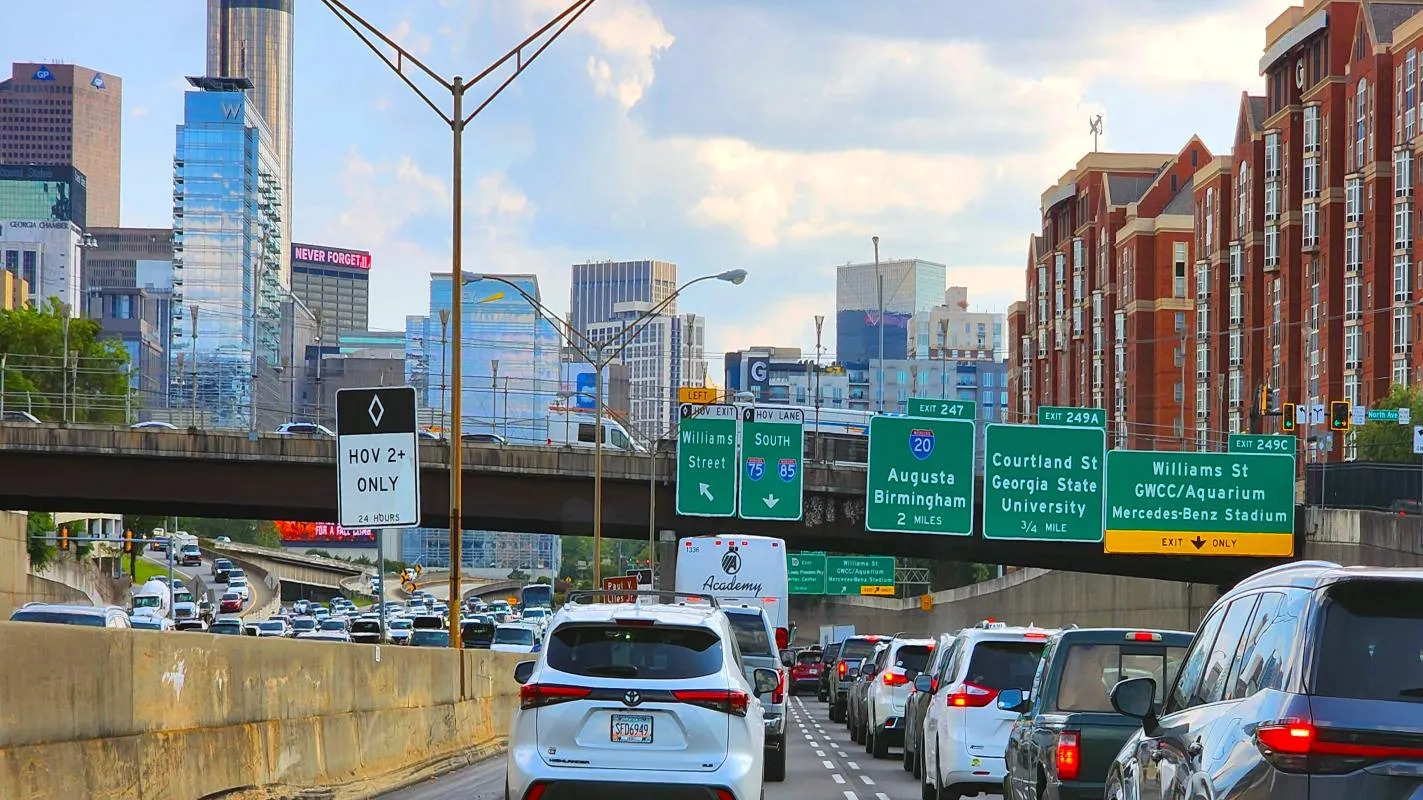
The Downtown Connector (I-75/I-85 merged) is the heart of Atlanta's traffic problem. It carries more vehicles per day than its original design intended, and any lane reduction from an incident causes city-wide ripple effects. Midtown surface streets (Peachtree, Spring, West Peachtree) see heavy midday and evening volumes from office commuters. MARTA rail is the most practical alternative for Midtown trips from the north or south.
Gwinnett County (I-85 NE Corridor)
Gwinnett is one of the fastest-growing counties in the US, and its commuters overwhelmingly use I-85 southbound in the morning and northbound in the evening. The stretch from the I-285 interchange to SR-316 is one of the most consistently delayed segments of highway in Georgia. There is no viable parallel route for this volume — surface alternatives like Buford Highway are heavily signalized and slow.
North Atlanta (GA-400 / Sandy Springs)
GA-400 is the lifeline for north Atlanta suburbs. The toll road provides express access but still backs up significantly during peaks. The I-285/GA-400 interchange near Hammond Drive is a consistent bottleneck in both directions during rush. The Perimeter area around Dunwoody and Sandy Springs also generates significant local congestion from office park traffic.
Northwest (I-75 / Marietta / Cobb County)
Cobb County's I-75 corridor is the third major suburban spoke feeding downtown Atlanta. The stretch between I-285 and the Barrett Parkway area carries a dense commuter load. Cobb County is unusual in that it does not have MARTA service — the county has historically voted against transit expansion — making the highway the only practical option for most commuters.
Best Times to Drive in Atlanta
Forecast Traffic for Your Atlanta Commute
Enter your origin and destination to get a 7-day heatmap of drive times. See exactly which departure windows are fastest for your specific route — not just average Atlanta traffic.
route Analyze My RouteAtlanta Traffic Patterns by Season & Event
☀️ Summer (June–August)
Atlanta traffic lightens moderately in summer as school schedules change and some commuters take vacation. The city's large corporate presence means weekday peaks never fully disappear, but midday and late morning windows open up noticeably. Summer heat also contributes to more vehicle breakdowns during peaks, which can trigger secondary incidents.
📚 Fall (September–November)
Back to school amplifies morning congestion significantly, particularly on suburban corridors serving school-dense areas like Gwinnett and Cherokee counties. September is historically Atlanta's worst month for traffic. The convergence of school schedules, full office occupancy, and active construction season creates conditions noticeably worse than summer.
🦃 Thanksgiving Week
Hartsfield-Jackson Airport — the world's busiest — generates a massive traffic surge during Thanksgiving week. I-85 south and I-75 south toward the airport back up heavily on the Wednesday before Thanksgiving. If you're not traveling, Tuesday and the Thursday/Friday of Thanksgiving week are actually among the quietest highway days of the year in Atlanta.
🎄 December Holidays
Traffic drops sharply between Christmas and New Year's as Atlanta's corporate workforce largely takes the week off. This is one of the best driving windows of the year on all major corridors. Holiday shopping does increase surface street and retail-area congestion on weekends in December, but freeways remain manageable.
🏈 Braves / Falcons Games
Braves games at Truist Park (off I-285 / I-75 northwest) create significant pre- and post-game backups on I-75 NW and surrounding surface streets. Falcons and Atlanta United games at Mercedes-Benz Stadium affect the Downtown Connector and I-20. Post-game dispersal from either venue hits whichever corridor is already loaded from the evening peak.
✈️ Major Events & Conventions
Atlanta hosts a large number of conventions and major events at the Georgia World Congress Center, CNN Center, and Mercedes-Benz Stadium year-round. Events with 50,000+ attendees noticeably affect downtown surface streets and the nearby Connector on-ramps. Check the GWCC calendar if you're planning trips through downtown on weekends.
Atlanta Traffic Research & Data Sources
For deeper dives into Atlanta traffic data, the following are the most reliable public sources and research institutions.
- GDOT NaviGAtor — Georgia DOT's real-time traffic management system with live camera feeds and incident data. dot.ga.gov/navigator
- 511 Georgia — Real-time traffic, incidents, and travel times for Georgia highways. 511ga.org
- ARC (Atlanta Regional Commission) — Regional transportation planning, data, and long-range mobility studies. atlantaregional.org
- SRTA (State Road and Tollway Authority) — Manages Georgia's managed lanes and Peach Pass express lanes on I-75, I-85, and GA-400. srta.ga.gov
- Georgia Tech School of Civil & Environmental Engineering — Research on Atlanta congestion, smart transportation, and urban mobility. ce.gatech.edu
- Georgia Tech STRIDE Center — USDOT University Transportation Center focused on safety, technology, and resilience in transportation. stride.ce.ufl.edu
- TomTom Traffic Index – Atlanta — Historical congestion rankings and delay-per-driver data for Atlanta. tomtom.com/traffic-index
- Atlanta Journal-Constitution Traffic — Local traffic reporting and commuter coverage for the Atlanta metro. ajc.com
- Streetsblog Atlanta — Coverage of Atlanta transportation policy, transit, and street safety. atlanta.streetsblog.org
- WSB Traffic — WSB-TV's live Atlanta traffic coverage with real-time updates throughout the day. wsbtv.com/traffic
More City Traffic Guides
Compare traffic patterns across other major US cities.