New York City Traffic: Rush Hours, Worst Roads & How to Navigate NYC
New York City traffic is unlike any other in the United States. The combination of extreme density, limited road capacity, a complex bridge-and-tunnel network, and tens of thousands of daily commuters from New Jersey, Long Island, and Westchester creates congestion that rarely fully clears on weekdays. This guide covers when it's worst, where it's worst, and the specific windows where drive times in NYC drop meaningfully.
New York City Rush Hour Times
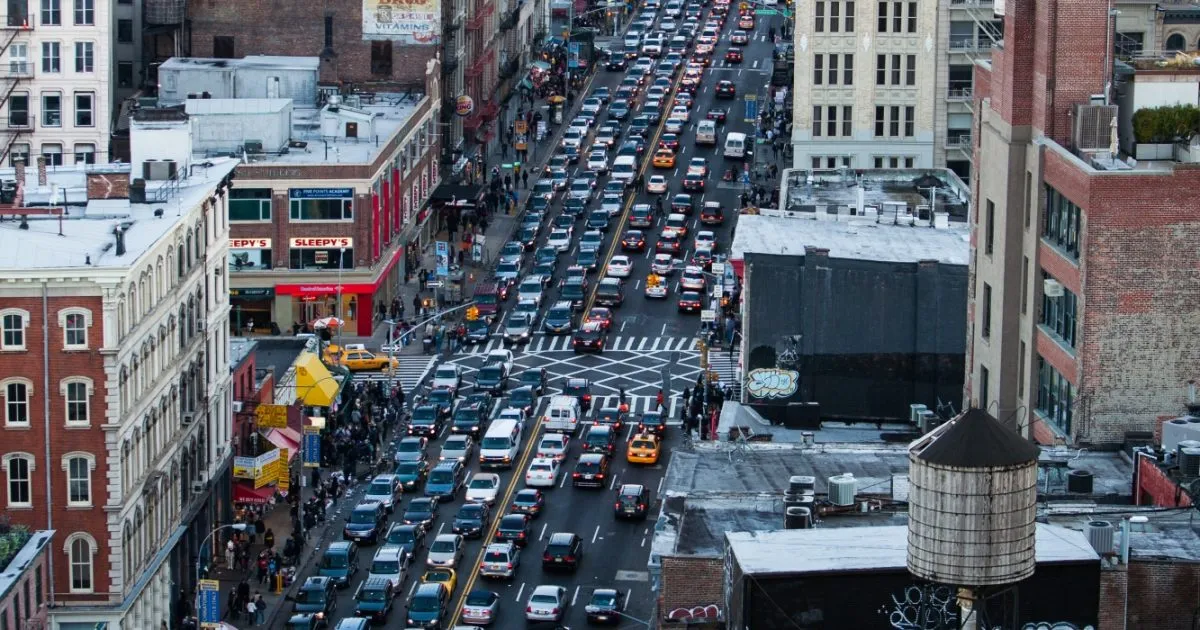
Manhattan is in a category of its own — the borough generates and absorbs enormous traffic volumes throughout the entire business day. Even during midday, surface streets in Midtown and the approaches to bridges and tunnels carry heavy volume. The practical meaning is that "avoiding traffic" in NYC almost always means choosing a time window, not just avoiding rush hour.
Friday afternoons are consistently the worst single window of the week. Outbound traffic toward Long Island, New Jersey, and upstate begins building before 2:00 PM and doesn't clear until 7:30 PM or later.
NYC's Most Congested Roads
Six corridors account for the majority of severe, recurring delay in and around New York City.
| Road | Severity | Worst Segment | Peak Direction |
|---|---|---|---|
| I-95 / Cross Bronx Expressway | Critical | GWB to Throgs Neck (entire corridor) | Both directions, all day |
| I-495 / Long Island Expressway (LIE) | Critical | Queens to Queens-Midtown Tunnel approach | EB evenings, WB mornings |
| I-278 / BQE (Brooklyn-Queens Expressway) | Critical | Brooklyn Heights Cantilever (Atlantic Ave to Sands St) | Both peaks |
| FDR Drive | High | 34th St to 96th St (Midtown to Upper East Side) | NB mornings, SB evenings |
| I-87 / Major Deegan Expressway | High | Yankee Stadium to GWB | SB mornings, NB evenings |
| I-278 / Gowanus Expressway | High | 4th Ave to Verrazzano-Narrows Bridge | NB mornings, SB evenings |
| Belt Parkway | Moderate | JFK Airport to Verrazzano | Both peaks, especially near JFK |
The Cross Bronx deserves particular attention. Built through a densely populated residential area in the 1950s, it has no room to expand and no adequate bypass. It is one of the most consistently congested urban corridors in the country — INRIX has ranked the GWB-to-Throgs-Neck stretch among the top ten most congested roads in the US for multiple consecutive years.
The LIE earned its nickname honestly. The Queens approach to the Queens-Midtown Tunnel is a chokepoint that backs traffic deep into Queens during both peaks. The only real mitigation is leaving outside the peak windows.
NYC Bridges & Tunnels: What to Expect
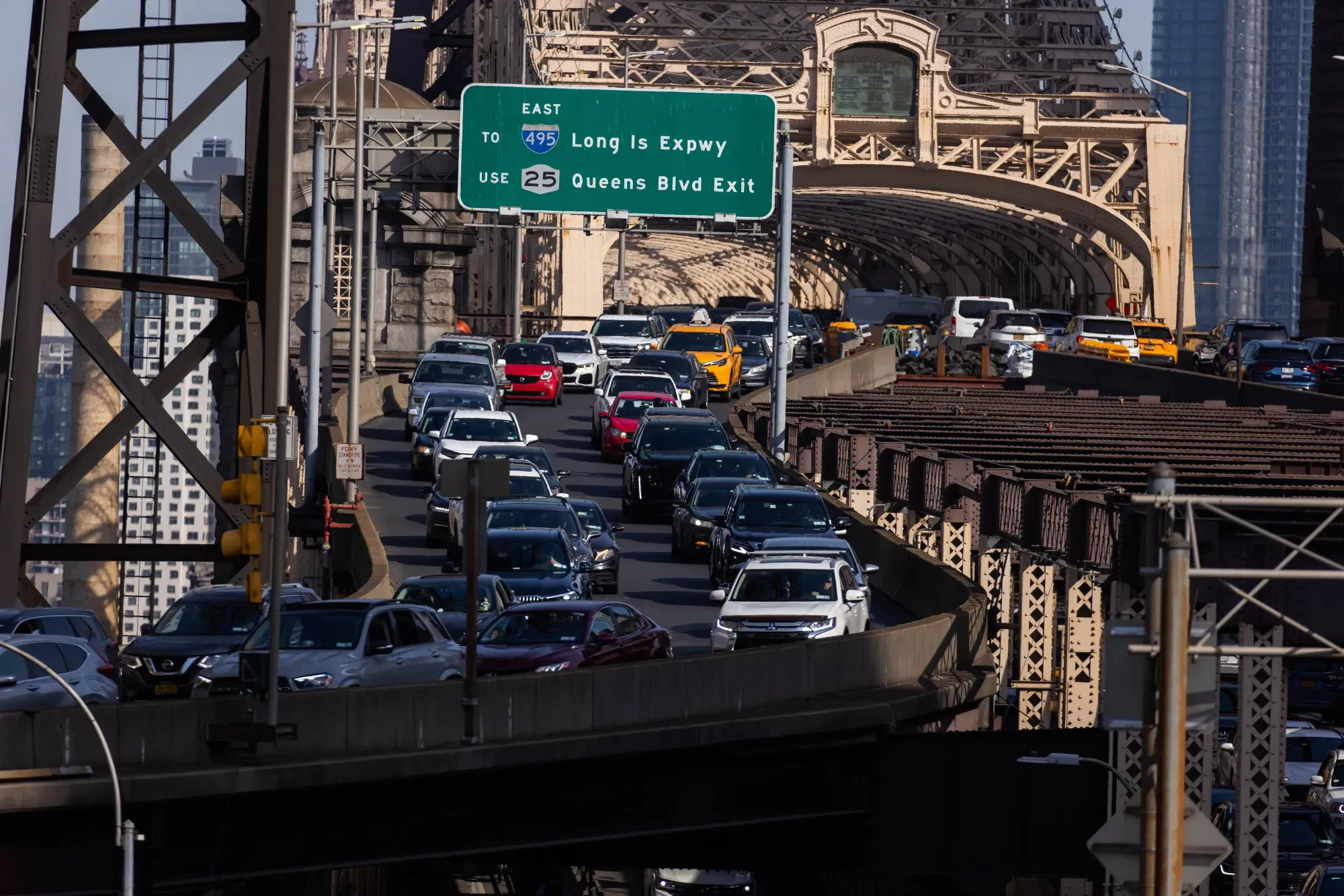
Because Manhattan is an island, every vehicle entering or leaving it crosses a bridge or tunnel. These crossings are structural bottlenecks that can't be bypassed — they are where delay concentrates most severely.
George Washington Bridge (I-95)
The busiest bridge in the world by vehicle count. Upper and lower levels carry 14 lanes of traffic between Fort Lee, NJ and Washington Heights, Manhattan. Inbound (eastbound) is worst 7:30–9:30 AM; outbound is worst 4:30–7:00 PM. The lower level serves local traffic; the upper level carries through I-95 traffic. Both back up severely during incidents on either approach. Real-time status at panynj.gov.
Lincoln Tunnel (NJ to Midtown)
Three tubes connect Weehawken, NJ to Midtown Manhattan at 38th–40th St. The dedicated XBL (Exclusive Bus Lane) on the NJ approach carries thousands of buses during morning rush — which is one reason buses are dramatically faster than cars on this corridor during peak hours. Inbound car traffic is worst 7:00–9:30 AM. Outbound is worst 4:30–7:00 PM Friday. Status at panynj.gov.
Holland Tunnel (NJ to Lower Manhattan)
Two tubes connect Jersey City to Canal Street. Serves financial district and lower Manhattan. Morning inbound and evening outbound follow typical peak patterns. The Canal Street approach on the Manhattan side is a frequent surface-street bottleneck. Status at panynj.gov.
Queens-Midtown & Hugh L. Carey Tunnels
The Queens-Midtown Tunnel (I-495) is the eastern approach to Manhattan from Queens and Long Island — where the LIE terminates. Morning westbound (into Manhattan) is severe. The Hugh L. Carey (Brooklyn-Battery) Tunnel connects lower Manhattan to Brooklyn and is particularly slow during both peaks given its proximity to the Financial District.
Verrazzano-Narrows Bridge
Connects Staten Island to Brooklyn via the I-278. The SI Expressway approach on the Staten Island side and the Gowanus Expressway approach on the Brooklyn side both back up badly during peaks. The bridge is toll-free outbound (SI to Brooklyn) and paid inbound — which affects traffic distribution. Status via 511NY.org.
Traffic Hot Spots by Borough
Manhattan
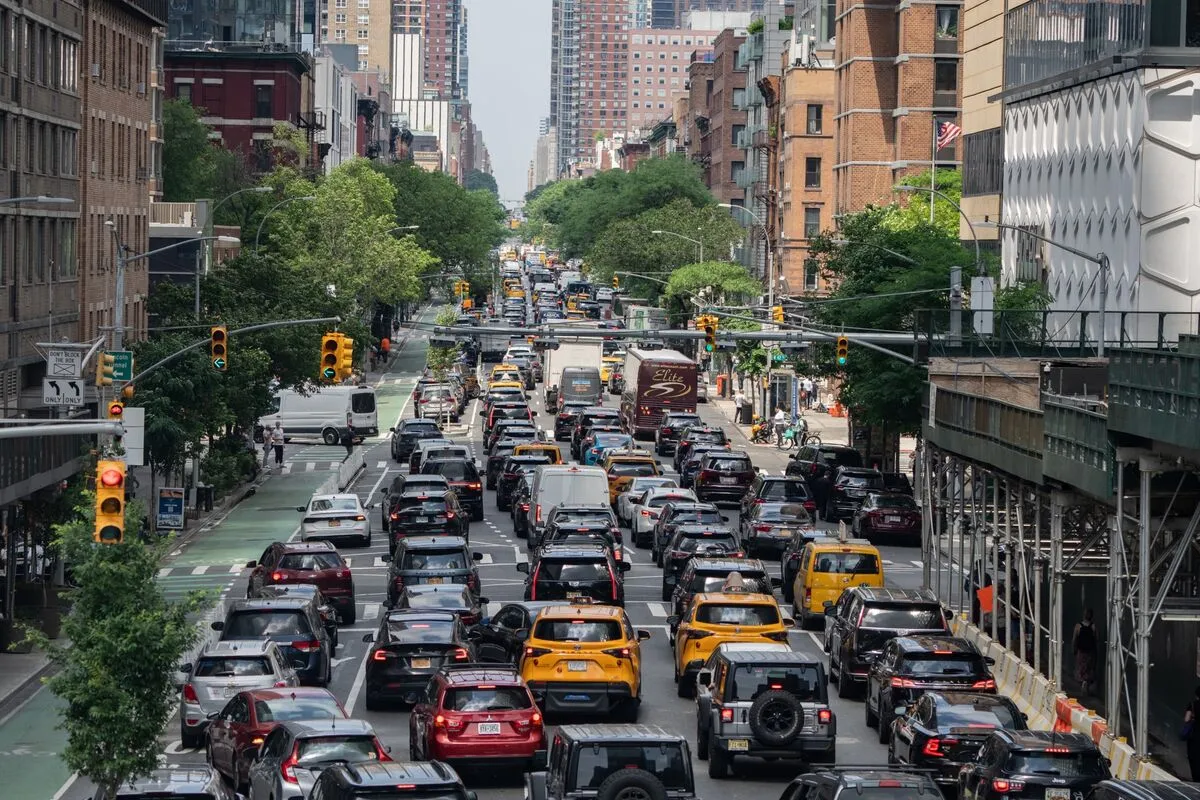
The Midtown grid locks up completely during peak hours — especially crosstown streets (34th, 42nd, 57th). The FDR Drive and West Side Highway/Route 9A are the main north-south arterials and both saturate. Congestion pricing has reduced some vehicle volume below 60th Street since June 2024, with measurable improvement in average speeds on some corridors. Plan 30–45 minutes of extra time for any Midtown trip during the 8:00–9:30 AM or 5:00–6:30 PM window.
Brooklyn
The BQE through the Brooklyn Heights Cantilever — the triple-cantilevered section carrying the elevated walkway along the Promenade — is structurally constrained and cannot be widened. It is chronically congested during both peaks. Atlantic Avenue, Flatbush Avenue, and Fourth Avenue are the main surface-street alternatives, all of which also back up. Eastern Brooklyn is additionally affected by Belt Parkway delays near JFK.
Queens
The LIE dominates Queens traffic. The approach to the Queens-Midtown Tunnel backs traffic through multiple exits on weekday mornings. Grand Central Parkway near JFK Airport creates additional congestion, especially during flight surge windows. The Van Wyck Expressway (I-678) connecting JFK to the LIE and Grand Central Parkway is one of the most reliably slow short stretches of road in the region.
The Bronx
The Cross Bronx (I-95) cuts through the center of a densely populated borough with almost no room for expansion. Exit spacing is tight and on-ramp merges are frequent, creating constant weaving and braking. I-87 (Major Deegan) along the Harlem River corridor also backs up significantly, particularly near Yankee Stadium on game days. Through traffic on I-95 has no viable bypass within the borough.
Staten Island
The Staten Island Expressway (I-278) is the borough's primary east-west route connecting the Verrazzano-Narrows Bridge to the Goethals Bridge toward New Jersey. Both ends back up during peaks. The Goethals Bridge reconstruction improved capacity, but the expressway itself remains a bottleneck. The Staten Island Ferry is a toll-free car-free alternative for commuters heading to Lower Manhattan.
Best Times to Drive in New York City
Forecast Traffic for Your NYC Route
Enter your origin and destination to get a 7-day heatmap of drive times across the full week. See exactly which departure windows are fastest for your specific route — not just average NYC traffic.
route Analyze My RouteNYC Traffic Patterns by Season & Event
☀️ Summer Fridays (June–August)
The Hamptons exodus is real and severe. Every Friday afternoon from June through Labor Day, the LIE eastbound and Sunrise Highway fill rapidly from 1:00 PM onward. The Long Island Rail Road is materially faster for Hamptons-bound travelers. The Belt Parkway and Southern State Parkway are secondary overflow routes that also back up.
📚 September — Worst Month
Schools reopen, full workplace occupancy returns, and construction season is still active. September is historically the worst single month for NYC-area traffic. The combination of school buses, full commuter volumes, and active lane closures creates conditions notably worse than the rest of the fall.
🦃 Thanksgiving Week
The Wednesday before Thanksgiving is one of the worst traffic days in the New York area. I-95 southbound and the Garden State Parkway southbound become parking lots by early afternoon. Traveling on Tuesday, or departing after 8:00 PM Wednesday, avoids most of it. The Sunday after Thanksgiving is similarly heavy on inbound routes.
🏙️ NYC Marathon (Early November)
The NYC Marathon closes the Verrazzano-Narrows Bridge to vehicles on race day morning and causes significant street closures across all five boroughs. Plan for major disruptions to the BQE, FDR Drive, and cross-borough surface routes. The closures typically begin before 7:00 AM and the course doesn't reopen fully until midday.
⚾ Yankees & Mets Home Games
Yankee Stadium sits directly on the Major Deegan (I-87) in the Bronx. Post-game traffic extends the evening rush by 60–90 minutes on nearby expressways. Citi Field (Mets) in Flushing is adjacent to the Grand Central Parkway and creates congestion on the LIE and Van Wyck post-game. Both teams play roughly 81 home games per season.
🎄 December Holidays
The week between Christmas and New Year's is one of the lightest traffic weeks of the year. Business volumes drop sharply and school is out. Midtown surface streets, however, remain congested with holiday shopping and tourist traffic through Christmas Eve — avoid the 34th St and 5th Ave corridors specifically.
NYC Traffic Research & Data Sources
The most reliable public data sources and research institutions covering New York City traffic, transit, and regional mobility.
- 511NY — New York State's official real-time traffic, transit, and incident information system. The most comprehensive single source for live NYC-area road conditions. 511ny.org
- NYC DOT — New York City Department of Transportation. Road projects, signal timing, parking rules, and traffic counts. nyc.gov/dot
- Port Authority of NY & NJ — Real-time delay information for the GWB, Lincoln Tunnel, Holland Tunnel, Bayonne Bridge, Goethals Bridge, and Outerbridge Crossing. panynj.gov
- MTA Congestion Pricing — Official information on the Congestion Relief Zone tolling program, rates, exemptions, and payment. mta.info
- NYSDOT — New York State Department of Transportation. Highway projects, safety data, and regional corridor studies. dot.ny.gov
- NYC Open Data — Traffic Volume Counts — Historical automated traffic recorder (ATR) data across NYC street segments, updated annually. data.cityofnewyork.us
- NYC Open Data — Automated Traffic Speed — Real-time and historical link speed data from NYC DOT's traffic management systems. data.cityofnewyork.us
- NYSDOT Traffic Data Viewer — Statewide Annual Average Daily Traffic (AADT) counts for all state roads including NYC interstates. dot.ny.gov/tdv
- INRIX Traffic Scorecard — Annual ranking of the most congested roads and cities in the US, consistently places NYC corridors in the top tier nationally. inrix.com/scorecard
- NYU Rudin Center for Transportation — Research on urban mobility, congestion pricing, and NYC transportation policy. engineering.nyu.edu
- Columbia UTRC (University Transportation Research Center) — Region 2 USDOT research center focused on NYC-area transportation systems. utrc2.org
- Regional Plan Association — Long-term regional transportation and infrastructure planning for the NYC tri-state area. rpa.org
- Tri-State Transportation Campaign — Advocacy and research on transit, road safety, and congestion in NY, NJ, and CT. tstc.org
- Streetsblog NYC — The most detailed ongoing coverage of NYC transportation policy, congestion pricing, and street safety. nyc.streetsblog.org
- Transportation Alternatives — NYC-based advocacy organization with research on street safety and congestion. transalt.org
- NY1 Traffic — Local live traffic coverage from NY1 News with borough-by-borough updates throughout the day. ny1.com/traffic
- WAZE NYC Community — Real-time community-reported incidents and road closures for the NYC area. waze.com
More City Traffic Guides
Compare traffic patterns across other major US cities.